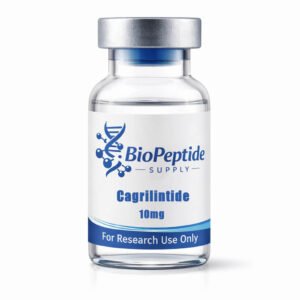
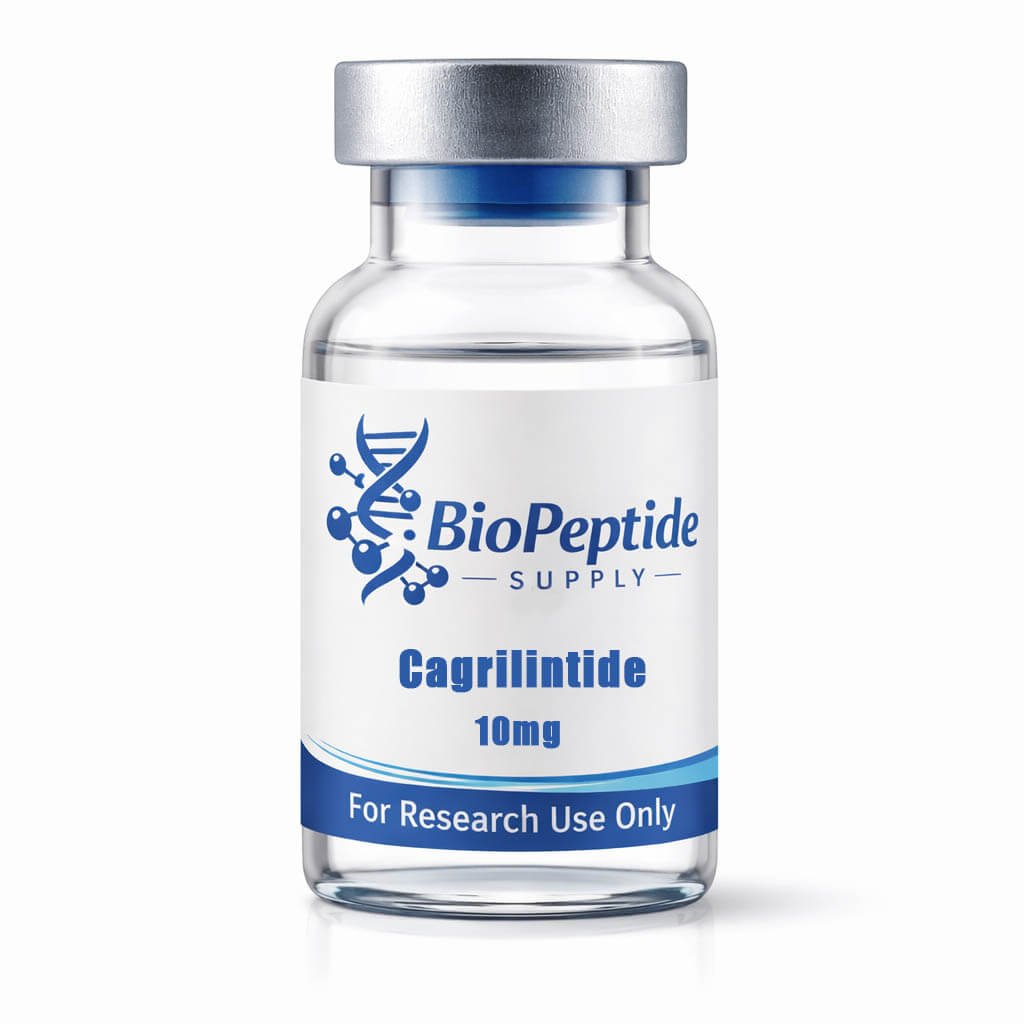
Cagrilintide 10mg – Amylin Analog for Metabolic Research
Overview and Scientific Background
Cagrilintide 10mg is a research-grade formulation of a long-acting amylin analog peptide, developed for investigation.
Real-World Research and Experimental Findings
Cagrilintide has been evaluated in preclinical studies and early clinical research programs, particularly in obesity and metabolic disorder models. Key observed findings include:
- Significant reduction in food intake in controlled study settings
- Enhanced satiety signaling and prolonged fullness perception
- Slower gastric emptying, contributing to reduced caloric intake
- Synergistic effects when studied alongside GLP-1 receptor agonists in combination therapies
Clinical development has explored its use both as a standalone agent and in combination with GLP-1 therapies for enhanced metabolic outcomes.
Mechanism of Action
Cagrilintide acts primarily through amylin receptor activation, influencing central and peripheral appetite regulation pathways:
- Central satiety signaling: Acts on brain regions involved in hunger control
- Gastric emptying delay: Slows digestion rate, increasing satiety duration
- Glucagon suppression modulation: Influences post-meal glucose regulation
- Energy intake reduction: Reduces overall caloric consumption behaviorally
These combined effects contribute to improved appetite control and metabolic balance in research models.
Pharmacokinetics and Biological Activity
Cagrilintide is designed as a long-acting peptide analog, allowing extended receptor activity compared to native amylin. In research environments, it is studied for sustained satiety effects and metabolic stability.
Observed experimental trends include:
- Prolonged appetite suppression effects in study models
- Reduced meal size and frequency in controlled conditions
- Enhanced satiety hormone signaling activity
- Improved metabolic regulation when combined with incretin agents
Why Cagrilintide 10mg Is Used in Research
Cagrilintide 10mg is used in metabolic and obesity research to evaluate:
- Amylin receptor pathway activation and satiety mechanisms
- Appetite suppression independent of GLP-1 signaling
- Combination therapy effects with incretin-based peptides
- Long-term energy intake regulation models
It is particularly important in studies exploring multi-hormonal weight regulation strategies.
Usage Guidance
Cagrilintide 10mg is intended strictly for controlled laboratory and scientific research use. All experimental design, handling, and administration must be conducted by qualified researchers in appropriate research environments.
FAQs
1. What is Cagrilintide used for in research?
It is studied for appetite regulation, satiety signaling, and metabolic control.
2. Is Cagrilintide a hormone?
It is an amylin analog, mimicking a natural hormone co-secreted with insulin.
3. How does it reduce appetite?
It activates satiety pathways in the brain and slows gastric emptying.
4. Does it affect weight loss?
Yes, clinical studies show dose-dependent reductions in body weight.
5. Is it used alone or in combination?
Both; it is also studied with GLP-1 receptor agonists for enhanced effects.
6. What is amylin?
A hormone that regulates post-meal glucose and appetite control.
7. Does it affect blood sugar?
It can influence postprandial glucose regulation through digestive slowing.
8. Why is the 10mg dose used?
It is used in research to evaluate higher-exposure metabolic responses.
9. What systems does it affect?
Central nervous system appetite control and gastrointestinal systems.
10. Is it approved for medical use?
No, it is a research compound and not a commercially approved drug.
Disclaimer
All products listed are intended strictly for research purposes only. They are not approved for human consumption, medical use, or therapeutic application. Use must comply with all applicable laws and regulations.