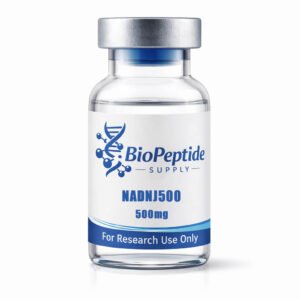
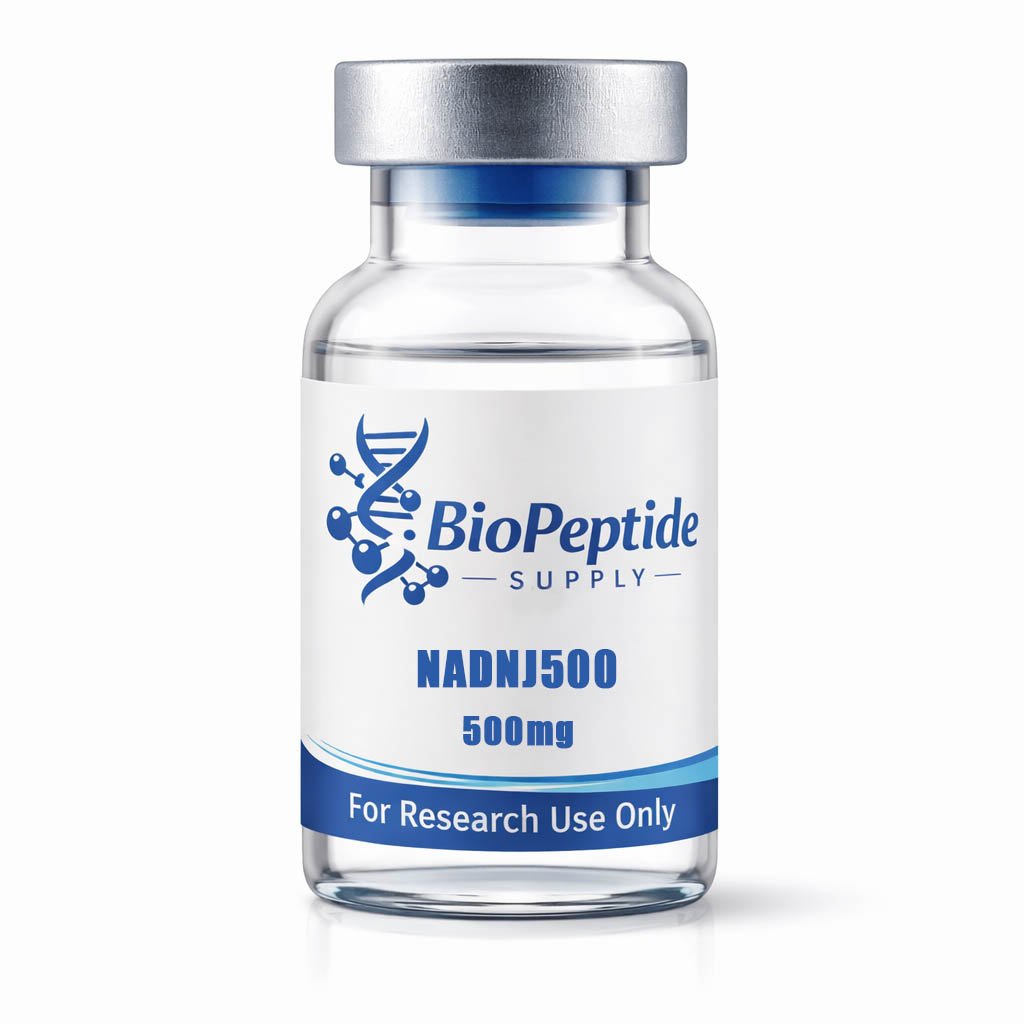
NADNJ500 500mg – High-Dose NAD⁺ Pathway Research Compound for Cellular Energy and Longevity Studies
Overview and Scientific Background
NAD+500mg refers to a high-dose research formulation associated with the NAD⁺ (Nicotinamide Adenine Dinucleotide) metabolic pathway, commonly linked to NAD precursors such as NMN (Nicotinamide Mononucleotide) and nicotinamide-based derivatives.
In biomedical science, NAD⁺ is a vital coenzyme present in all living cells. It plays a central role in cellular energy production, mitochondrial function, and DNA repair systems. Because NAD⁺ levels naturally decline with age, it has become a major focus in aging biology and metabolic research.
Real-World Research and Experimental Findings
Extensive preclinical and early clinical research has explored NAD⁺ metabolism and its precursors. Findings across cellular and animal models suggest:
- Enhanced mitochondrial ATP energy production
- Support for DNA repair enzyme activity (PARP pathways)
- Activation of sirtuin proteins (SIRT1–SIRT7), linked to longevity pathways
- Improved metabolic efficiency and oxidative stress resistance
- Potential role in neuroprotection and age-related decline models
These effects position NAD⁺ metabolism as a key research area in cellular aging and energy biology.
Mechanism of Action
NAD-related compounds work by increasing intracellular NAD⁺ availability, which supports multiple essential biological systems:
- Mitochondrial energy metabolism: Improves ATP production efficiency
- Sirtuin activation: Regulates gene expression linked to aging and cellular repair
- DNA repair pathways: Supports genomic stability under oxidative stress
- Redox balance regulation: Maintains cellular oxidation-reduction homeostasis
- Metabolic signaling: Influences glucose and lipid metabolism pathways
This multi-system involvement makes NAD⁺ central to cellular bioenergetics research.
Pharmacokinetics and Biological Activity
NAD⁺ itself is not efficiently absorbed directly, so research focuses on precursor compounds that convert into NAD⁺ within cells. At higher experimental concentrations such as 500mg, studies evaluate:
- Cellular uptake efficiency of NAD precursors
- Intracellular NAD⁺ level restoration potential
- Mitochondrial function under metabolic stress
- Energy output and oxidative stress response in models
Observed research trends include:
- Increased ATP production in mitochondrial studies
- Improved cellular resilience under oxidative stress
- Enhanced metabolic efficiency in experimental systems
- Support for DNA repair activity in damaged cell models
Why NADNJ500 500mg Is Used in Research
The 500mg research concentration is used to evaluate high-exposure metabolic and longevity responses. It is commonly studied in:
- Cellular energy metabolism and mitochondrial function research
- Aging biology and longevity pathway studies
- DNA repair and genomic stability models
- Neurodegenerative and metabolic disorder research frameworks
This makes it relevant in advanced bioenergetics and anti-aging research fields.
Usage Guidance
NADNJ500 500mg is intended strictly for controlled laboratory and scientific research use. All experimental design, handling, and administration must be conducted by qualified researchers in appropriate research environments.
FAQs
1. What is NAD used for in research?
It is studied for cellular energy production, DNA repair, and aging-related biological pathways.
2. What does NAD do in cells?
It supports mitochondrial ATP production and enzyme activity involved in repair processes.
3. Why is NAD important for aging research?
Because NAD levels decline with age and are linked to metabolic and cellular decline.
4. What are sirtuins?
They are NAD-dependent enzymes involved in gene regulation and longevity pathways.
5. Does NAD affect energy levels?
Yes, it is essential for cellular energy (ATP) production.
6. Is NAD a vitamin?
It is derived from vitamin B3 but functions as a coenzyme in cellular metabolism.
7. Why is the 500mg dose studied?
It is used in research to evaluate stronger metabolic and cellular responses.
8. Does NAD affect the brain?
Research suggests potential roles in neuronal energy metabolism and neuroprotection.
9. What systems does NAD affect?
Mitochondrial, metabolic, neurological, and DNA repair systems.
10. Is NAD a drug?
No, it is a biological coenzyme and research compound, not a standalone approved drug.
Disclaimer
All products listed are intended strictly for research purposes only. They are not approved for human consumption, medical use, or therapeutic application. Use must comply with all applicable laws and regulations.