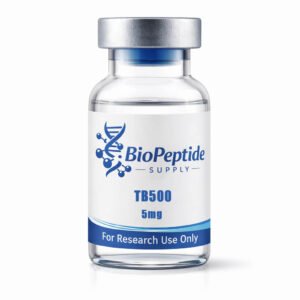
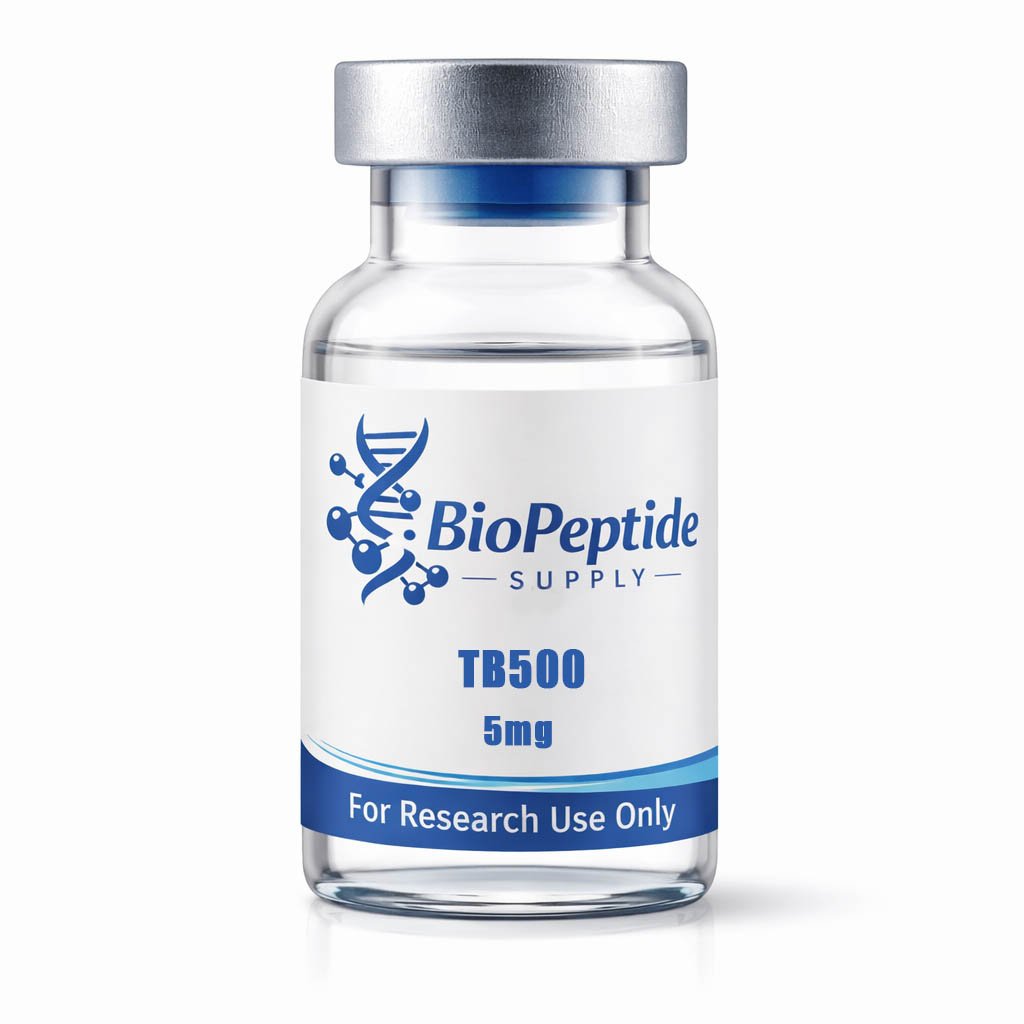
TB-500 5mg(Thymosin B4 Acetate) 5mg Regenerative Research Peptide for Tissue Repair Studies
Overview and Scientific Background
TB-500 (Thymosin B4 Acetate) 5mg (TB-500 5mg) is a research-grade formulation of a synthetic peptide fragment derived from Thymosin Beta-4 (Tβ4), a naturally occurring protein found in nearly all human and animal cells. It is widely studied in experimental biology for its potential role in tissue repair, cell migration, angiogenesis, and inflammation regulation.
In research contexts, TB-500 is associated with cellular repair pathways that influence how tissues respond to injury, particularly in muscle, tendon, ligament, and vascular systems.
Real-World Research and Experimental Findings
Most available evidence for TB-500 comes from preclinical (animal) studies and laboratory models. These studies suggest possible biological activity in several regenerative processes, including:
- Enhanced cell migration to injury sites
- Improved soft tissue repair in muscle and tendon models
- Support for angiogenesis (formation of new blood vessels)
- Modulation of inflammatory responses in damaged tissues
- Faster functional recovery in experimental injury models
While these findings are widely discussed in research literature, TB-500 has not been approved through large-scale human clinical trials.
Mechanism of Action
TB-500 is believed to work through multiple overlapping biological pathways:
- Actin regulation: Influences cellular structure and movement, supporting tissue repair
- Cell migration enhancement: Helps repair cells move toward damaged areas
- Angiogenesis support: Promotes new blood vessel formation in healing tissues
- Inflammatory modulation: Helps regulate cytokine activity in injury response
- Tissue remodeling support: Assists structural recovery in connective tissues
This multi-pathway activity is why TB-500 is studied in regenerative and musculoskeletal research.
Pharmacokinetics and Biological Activity
TB-500 is a synthetic peptide designed for stability and bioavailability in research settings. It is studied for systemic distribution and its potential ability to influence repair processes across multiple tissue types rather than localized effects alone.
Observed experimental trends include:
- Improved healing response in tendon and ligament injury models
- Faster recovery indicators in muscle damage studies
- Reduced inflammatory markers in localized tissue injury models
- Enhanced vascular support in regeneration environments
Why TB-500 5mg Is Used in Research
TB-500 5mg is commonly used in laboratory studies to evaluate regenerative mechanisms at moderate experimental concentrations. Researchers use it to investigate:
- Muscle and connective tissue repair pathways
- Angiogenesis and vascular regeneration processes
- Inflammation resolution in injury models
- Cell migration and tissue remodeling behavior
It is frequently studied alongside other regenerative peptides in experimental healing research.
Usage Guidance
TB-500 (Thymosin Beta-4 (Tβ4)) 5mg is intended strictly for controlled laboratory and scientific research use. All handling, experimental design, and administration must be conducted by qualified researchers in appropriate research environments.
FAQs
1. What is TB-500 used for in research?
It is studied for tissue repair, cell migration, and regenerative biology mechanisms.
2. Is TB-500 a natural compound?
It is a synthetic version of a fragment of the naturally occurring protein Thymosin Beta-4.
3. What tissues does it affect?
It is mainly studied in muscle, tendon, ligament, and vascular tissues.
4. Does TB-500 promote healing?
Preclinical studies suggest improved healing responses in animal models.
5. How does it work biologically?
It influences actin regulation, cell migration, and angiogenesis pathways.
6. Is there human clinical evidence?
Human clinical data is limited; most research comes from animal and lab studies.
7. Why is the 5mg dose used?
It is commonly used for moderate-dose research in regenerative studies.
8. Does it reduce inflammation?
Yes, it has shown modulation of inflammatory markers in experimental models.
9. What is its main research focus?
Regenerative medicine and musculoskeletal repair research.
10. Is it an approved drug?
No, it is a research peptide and not an approved pharmaceutical treatment.
Disclaimer
All products listed are intended strictly for research purposes only. They are not approved for human consumption, medical use, or therapeutic application. Use must comply with all applicable laws and regulations.