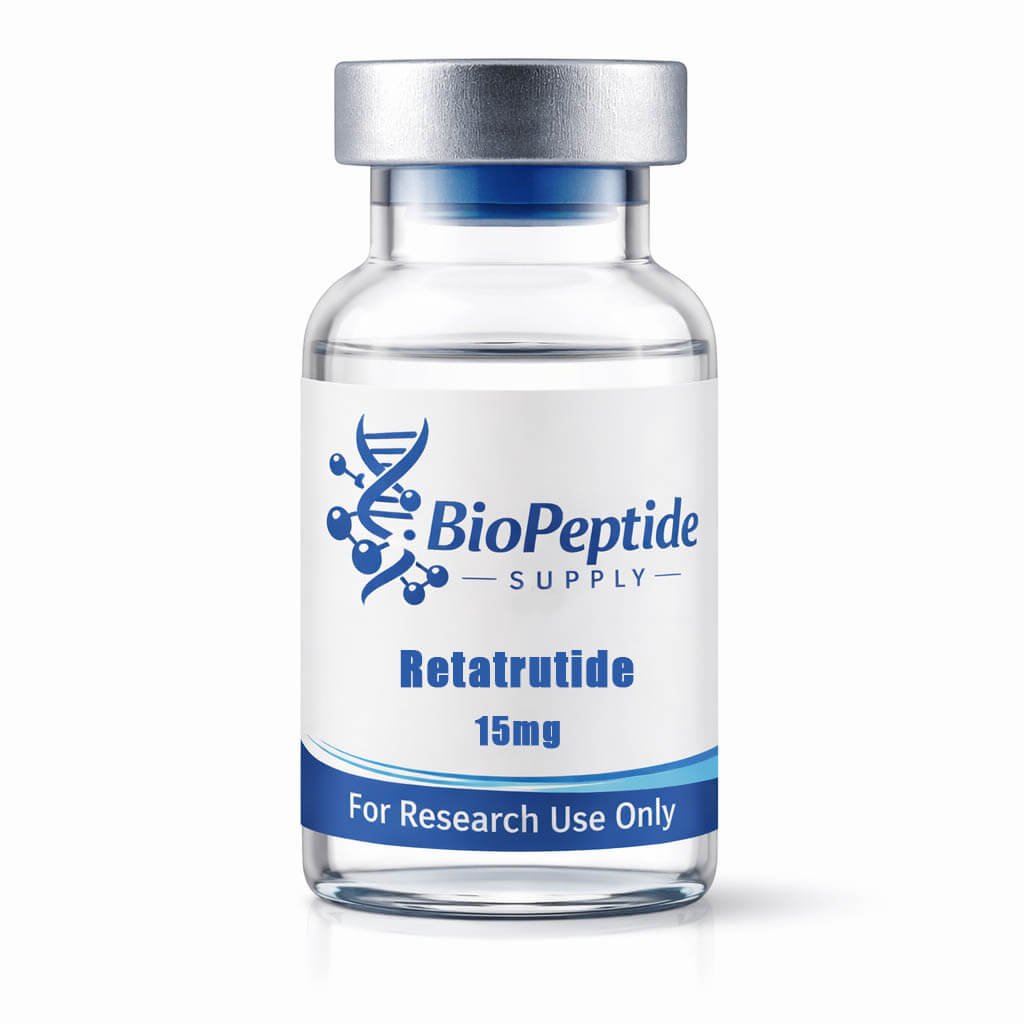
Retatrutide 15mg – Triple Agonist (GLP-1, GIP, Glucagon) for Advanced Metabolic Research
Overview and Scientific Background
Retatrutide 15mg is a high-concentration research formulation of a next-generation metabolic compound developed by Eli Lilly and Company. It is classified as a triple receptor agonist, targeting GLP-1 (glucagon-like peptide-1), GIP (glucose-dependent insulinotropic polypeptide), and glucagon receptors simultaneously.
This multi-pathway mechanism is significant because it combines three distinct metabolic controls: appetite regulation (GLP-1), insulin response enhancement (GIP), and energy expenditure modulation (glucagon). Together, these pathways create a broader physiological effect on body weight regulation and metabolic balance than earlier single- or dual-agonist therapies.
Real-World Clinical Evidence and Outcomes
Retatrutide has been evaluated in Phase 2 clinical studies focused primarily on obesity and metabolic dysfunction. Published clinical data shows substantial, dose-dependent weight reduction trends exceeding 20% in higher exposure groups over extended treatment periods, making it one of the most potent investigational metabolic agents studied to date.
Key clinical observations include:
- Significant and progressive weight reduction across dose levels
- Improved insulin sensitivity markers
- Meaningful reductions in HbA1c in metabolic study populations
- Increased energy expenditure compared to dual agonist therapies
These outcomes highlight its strong potential in addressing obesity and metabolic disease through multi-pathway hormonal modulation.
High-Dose Research Relevance (15mg Format)
Retatrutide 15mg is considered a high-dose research reference point used in experimental and dose-escalation studies. It is particularly relevant for investigating:
- Full triple-receptor activation dynamics
- Dose-dependent appetite suppression intensity
- Energy expenditure and metabolic rate shifts
- Comparative efficacy against GLP-1 and dual agonists (e.g., semaglutide and tirzepatide)
This makes it valuable for mechanistic research exploring how combined hormonal pathways influence systemic metabolism.
Mechanism of Action
Retatrutide works through simultaneous activation of three metabolic pathways:
- GLP-1 receptor activation: Reduces appetite, slows gastric emptying, improves insulin secretion
- GIP receptor activation: Enhances insulin response and supports metabolic efficiency
- Glucagon receptor activation: Increases energy expenditure and promotes fat utilization
The combined effect results in both reduced energy intake and increased energy output, which is a key distinction from earlier incretin therapies.
Pharmacokinetics and Biological Activity
Retatrutide is designed for sustained activity, supporting long-duration receptor engagement and stable metabolic effects in research environments. Its pharmacokinetic profile allows for consistent systemic exposure in controlled studies.
Observed biological effects include:
- Strong appetite suppression across dosing ranges
- Increased metabolic rate and energy utilization
- Improved glucose regulation markers
- Progressive and sustained weight reduction patterns
Why Retatrutide 15mg Is Important in Research
Retatrutide 15mg is widely used in metabolic research because it represents a mid-to-high exposure level within triple agonist studies. It allows researchers to evaluate:
- Synergistic effects of GLP-1, GIP, and glucagon activation
- Energy balance shifts (intake vs expenditure)
- Comparative metabolic performance vs tirzepatide and semaglutide
- Long-term adaptation to multi-receptor stimulation
Its strong clinical development data makes it a key compound in next-generation obesity research.
Usage Guidance
Retatrutide 15mg is intended strictly for controlled laboratory and scientific research use. All experimental design, dosing strategies, and administration protocols must be conducted by qualified researchers in appropriate research environments.
FAQs
1. What is Retatrutide 15mg used for in research?
It is used to study triple hormone receptor activation and metabolic regulation.
2. How is retatrutide different from tirzepatide?
Retatrutide activates GLP-1, GIP, and glucagon receptors, while tirzepatide activates GLP-1 and GIP only.
3. What do clinical studies show?
Phase 2 trials show significant weight loss, often exceeding 20% at higher doses.
4. Does it increase energy expenditure?
Yes, glucagon receptor activation contributes to increased metabolic rate.
5. How does it reduce appetite?
Through GLP-1 and GIP signaling in brain appetite regulation centers.
6. Does it affect blood sugar?
Yes, it improves insulin sensitivity and glycemic control markers.
7. Why is the 15mg dose used?
It represents a high-exposure reference point in dose-response research.
8. Is retatrutide widely studied?
Yes, especially in obesity and metabolic disease clinical trials.
9. What systems does it affect?
Endocrine, metabolic, gastrointestinal, and energy expenditure systems.
10. What research fields use it?
Obesity, diabetes, metabolic syndrome, and energy metabolism research.
Disclaimer
All products listed are intended strictly for research purposes only. They are not approved for human consumption, medical use, or therapeutic application. Use must comply with all applicable laws and regulations.