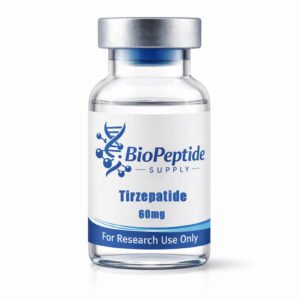
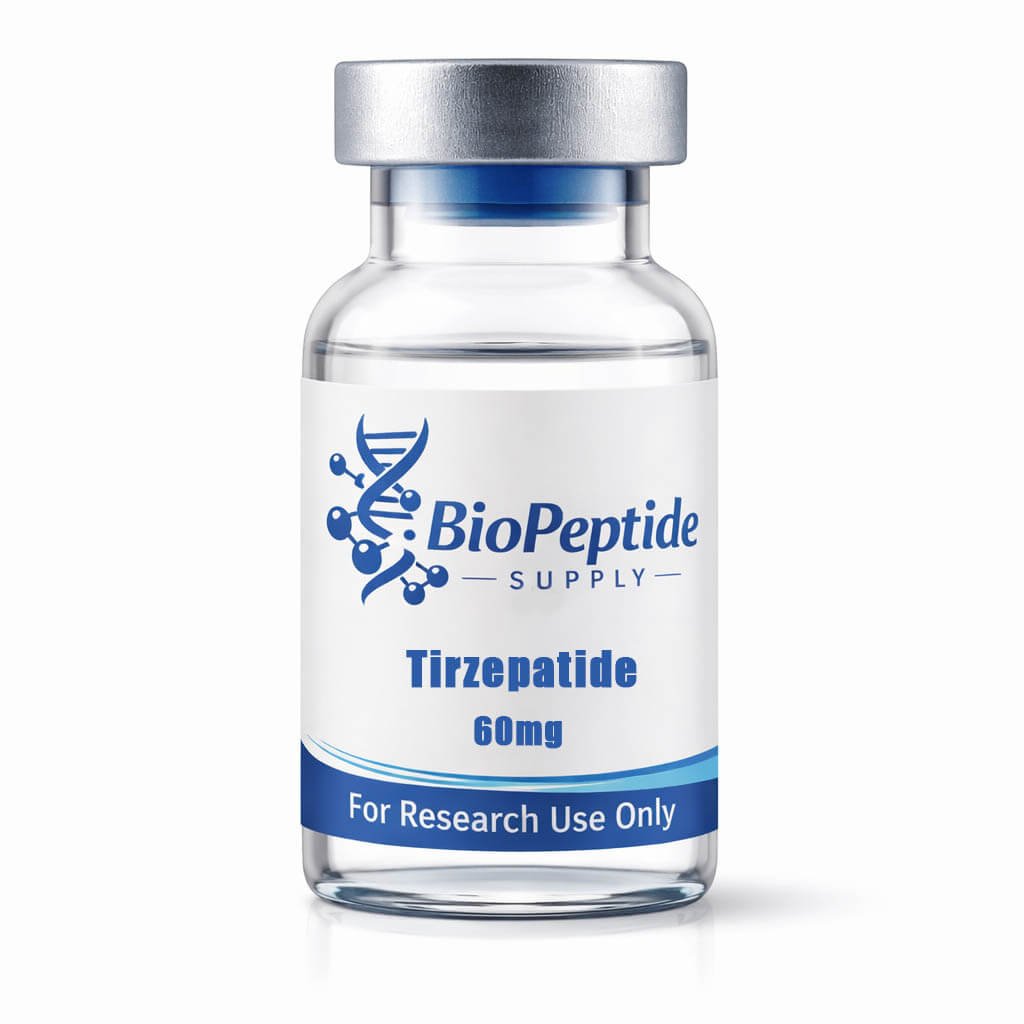
Tirzepatide 60mg – Ultra-High Dose Dual GIP/GLP-1 Agonist for Advanced Metabolic Research
Overview and Scientific Background
Tirzepatide 60mg is an ultra-high-concentration research format of a dual incretin receptor agonist developed by Eli Lilly and Company. It is designed to simultaneously activate both glucagon-like peptide-1 (GLP-1) and glucose-dependent insulinotropic polypeptide (GIP) receptors, producing a synergistic metabolic response that extends beyond single-pathway incretin therapies.
In physiological terms, GLP-1 regulates appetite suppression, delays gastric emptying, and enhances glucose-dependent insulin secretion, while GIP improves insulin response and influences lipid metabolism. The dual activation of these pathways creates a broader regulatory effect on energy balance, glucose homeostasis, and satiety signaling.
Real-World Clinical Evidence and Outcomes
Tirzepatide has been extensively studied in the SURPASS (type 2 diabetes) and SURMOUNT (obesity) clinical trial programs, which are among the most comprehensive datasets in metabolic medicine.
In SURMOUNT-1, participants without diabetes achieved average weight reductions of approximately 15% to over 20%, depending on dose and treatment duration, with higher-dose groups showing stronger responses. In SURPASS trials, tirzepatide demonstrated:
- HbA1c reductions often exceeding 2.0%
- Significant improvements in fasting glucose
- Substantial and sustained body weight reduction
- Enhanced insulin sensitivity and beta-cell function
These results position tirzepatide as one of the most effective metabolic agents studied in modern clinical research.
High-Dose Research Relevance (60mg Format)
Tirzepatide 60mg is an ultra-extreme experimental concentration used in controlled laboratory environments to explore theoretical upper limits of dual incretin receptor activation. It is not representative of clinical dosing but is utilized in mechanistic research to investigate:
- Maximum GLP-1 and GIP receptor saturation thresholds
- Extreme dose-response relationships in metabolic pathways
- Neuroendocrine regulation of appetite under high receptor stimulation
- Long-term metabolic adaptation and feedback resistance mechanisms
This makes it relevant for advanced modeling of energy regulation and endocrine system behavior under intensified incretin signaling.
Mechanism of Action
Tirzepatide functions through dual receptor engagement:
- GLP-1 receptor activation: Reduces appetite, slows gastric emptying, and enhances insulin secretion in a glucose-dependent manner
- GIP receptor activation: Enhances insulin response and supports lipid metabolism regulation
- Synergistic metabolic effect: Improves satiety, reduces caloric intake, and increases overall metabolic efficiency
This dual mechanism distinguishes tirzepatide from single-incretin therapies and contributes to its strong metabolic effects.
Pharmacokinetics and Biological Activity
Tirzepatide has a half-life of approximately 5 days, enabling sustained receptor activation and once-weekly exposure in both clinical and research contexts. This prolonged activity supports stable metabolic outcomes and consistent physiological responses.
Observed biological effects in research include:
- Sustained appetite suppression and reduced hunger signaling
- Improved postprandial glucose control
- Gradual and persistent weight reduction trends
- Enhanced systemic metabolic efficiency
Why Tirzepatide 60mg Is Used in Research
Tirzepatide 60mg is used in highly controlled experimental frameworks to evaluate extreme upper-bound responses of dual incretin signaling. Researchers use it to study:
- Theoretical maximum receptor activation limits
- Deep metabolic adaptation under sustained high exposure
- Appetite regulation under receptor saturation conditions
- Comparative modeling against GLP-1–only compounds
Its strong clinical foundation ensures that even high-dose research remains grounded in validated human trial data.
Usage Guidance
Tirzepatide 60mg is intended strictly for controlled laboratory and scientific research use. All experimental design, dosing strategies, and administration protocols must be conducted by qualified researchers within appropriate research environments.
FAQs
1. What is Tirzepatide 60mg used for in research?
It is used to study extreme high-dose dual GIP and GLP-1 receptor activation and metabolic responses.
2. What do clinical trials show about tirzepatide?
SURMOUNT-1 demonstrated up to 15–20%+ weight loss depending on dose.
3. How is tirzepatide different from semaglutide?
It activates both GIP and GLP-1 receptors, while semaglutide targets only GLP-1.
4. Does tirzepatide affect blood sugar levels?
Yes, it significantly improves HbA1c and fasting glucose in clinical studies.
5. How does it reduce appetite?
It enhances satiety signaling through dual incretin pathways.
6. What is its half-life?
Approximately 5 days, supporting sustained weekly activity.
7. Why is the 60mg dose studied?
It allows evaluation of theoretical maximum receptor activation and metabolic response limits.
8. Is tirzepatide widely researched?
Yes, especially in obesity and type 2 diabetes clinical programs.
9. What systems does it affect?
Endocrine, metabolic, gastrointestinal, and central appetite regulation systems.
10. What research fields use it?
Obesity, diabetes, metabolic syndrome, and energy balance research.
Disclaimer
All products listed are intended strictly for research purposes only. They are not approved for human consumption, medical use, or therapeutic application. Use must comply with all applicable laws and regulations.